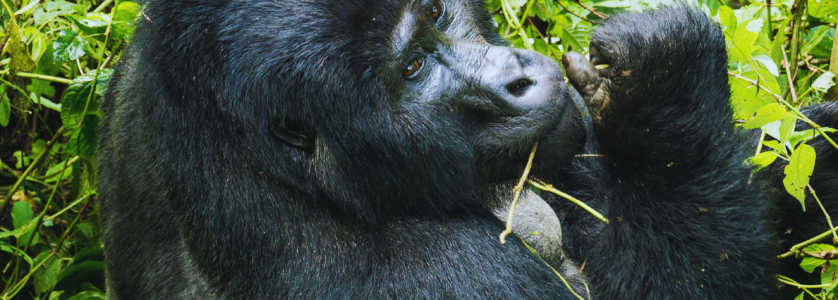
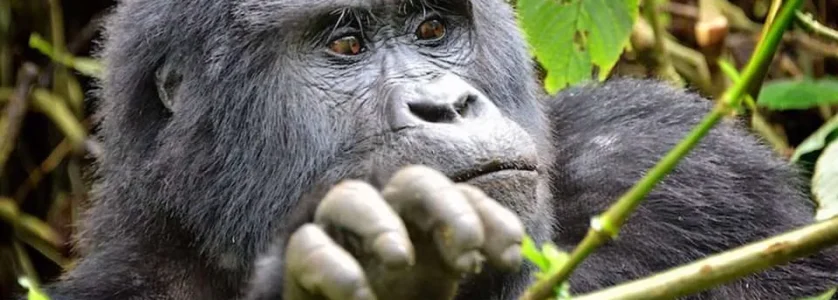
You have dreamed of locking eyes with a wild silverback for decades. But a harsh reality stands between you and the Bwindi Impenetrable Forest: your physical mobility. The terrain is a brutal, vertical maze of slick mud, tangled roots, and stinging nettles. If you have double knee replacements, chronic back pain, or rely on a wheelchair, standard tour operators will often bluntly tell you the jungle is off-limits.
They are wrong.
Missing the apex wildlife experience of your life due to a physical limitation is unacceptable. You do not have to sit at the lodge while your family tracks the primates. Elite uganda safari packages integrate a highly specialized, localized solution designed specifically for accessibility: the sedan chair and stretcher porter system.
Having organized complex, mixed-mobility expeditions deep into East Africa’s high-altitude cloud forests, I understand the anxiety surrounding this process. You are trusting strangers to carry you up a mountain. Will it hurt? Is it safe? Is it dignified?
Let’s strip away the marketing fluff. Here is the unvarnished, logistical breakdown of how 12-porter stretcher teams operate, the exact harness mechanics involved, and the cost-to-benefit reality of assisted gorilla trekking.
The Mechanics of the Stretcher: Harness Comfort Analysis
Do not picture a flimsy hammock. The modern “sedan chair” (often colloquially called the “helicopter” by local guides) is a piece of heavy-duty, custom-engineered equipment.
It consists of a steel-welded frame securely fastened to two massive, parallel bamboo poles. The seat itself is typically a repurposed, heavily padded automotive or aircraft seat.
Comfort and Safety Infrastructure:
- The Five-Point Harness: You are not just sitting; you are strapped in. Quality chairs feature lap belts and shoulder harnesses to keep your center of gravity locked dead-center, preventing you from shifting during steep ascents.
- Suspension Dynamics: The natural flex of the bamboo poles acts as a shock absorber. It heavily dampens the jolts of the porters navigating rocky or rutted terrain, protecting fragile spines and hips.
- Weather Shielding: You are exposed to the elements. I strictly mandate that our clients are fitted with heavy-duty ponchos before boarding the chair, as holding an umbrella while being carried through thick vines is a snag hazard.
The 12-Porter Team: Safety, Stamina, and Dignity
A standard stretcher team consists of 12 to 16 elite local porters. Why so many? Because carrying an adult human through a rainforest requires a relay system.
Four porters shoulder the bamboo poles at any given time. The remaining eight flank the stretcher, using machetes to clear a wider path through the brush, spotting foot placements, and rotating into the carrying positions every ten to fifteen minutes. This constant rotation prevents muscle fatigue and ensures the stretcher never drops.
The Dignity Equation:
Many Western travelers feel immense guilt or embarrassment at the thought of being carried by locals. You must discard this mindset.
In Bwindi and Mgahinga, securing a spot on a stretcher team is a highly coveted, lucrative job. These men and women are professional athletes of the mountain. You are not imposing a burden; you are directly injecting hundreds of dollars into the local micro-economy, paying school fees, and supporting families. The atmosphere during the trek is not one of subjugation, but of intense pride, camaraderie, and rhythmic teamwork. It is a regal, deeply respected process.
Weight Limits and Physical Realities
Physics cannot be ignored, even by a 12-man team. Transparency regarding weight is critical before booking assisted uganda safari packages.
- The Standard Threshold: The baseline weight limit for a 12-porter team is 100 kg (220 lbs).
- The Heavy Payload Protocol: If you weigh between 100 kg and 120 kg (220 – 264 lbs), the logistics change. We must deploy a 16-to-20-man team, utilizing reinforced bamboo. This heavily increases the operational cost and requires advanced notice.
- The Hard Cap: Above 120 kg, stretcher trekking becomes mathematically dangerous on a 60-degree mud incline. We typically advise against the trek at this weight to protect both the client and the porters.
The Cost-to-Benefit Ratio of Assisted Trekking
Is the extra expense worth it? For travelers who physically cannot walk the trail, the answer is an unequivocal yes. Here is a breakdown of the value proposition.
| Logistical Element | Standard Trek (Walking) | Stretcher Trek (Assisted) |
| Base Permit Cost | $800 USD | $800 USD |
| Porter / Support Cost | $20 USD (1 standard porter) | $400 – $500 USD (12-16 man team) |
| Physical Exertion | High to Extreme | Near Zero (Passive riding) |
| Pacing Control | Dictated by your lungs/knees. | Dictated by a fresh, rotating athletic team. |
| Family Integration | Risk of holding the family back. | Arrive simultaneously with your group, zero guilt. |
Note: The stretcher fee is paid directly to the local community porter association in cash.
Integrating Stretcher Logistics into Your Itinerary
You cannot simply show up at the Bwindi park headquarters at 7:00 AM and demand a sedan chair.
Demand for these specialized teams outstrips supply, especially during the dry seasons (June to August, December to February). When we design your itinerary, we secure the sedan chair the exact same day we purchase your gorilla permit.
Furthermore, the head ranger will strategically assign your stretcher team to a fully habituated gorilla family that is known to range closer to the trailhead or in areas with slightly less severe elevation gains, optimizing the safety of the entire operation.
Gorilla trekking is not a gated privilege for the young and hyper-fit. With the right logistical infrastructure, ruthless preparation, and the immense strength of the local porter teams, the impenetrable forest becomes entirely accessible.
Frequently Asked Questions
How do I get out of the sedan chair when we reach the gorillas?
Once the trackers locate the gorilla family, the porters will gently lower the stretcher to flat ground. You will unbuckle and, depending on your mobility, either stand, use walking sticks, or sit on a portable camp stool provided by your team to watch the gorillas for your allotted hour. The porters wait behind the viewing line until you are ready to return.
Is it scary to be carried on the steep slopes?
It can be mildly disorienting for the first ten minutes as you adjust to the sway of the bamboo and the altitude. However, the porters communicate constantly and move with a synchronized, steady rhythm. Once you realize how sure-footed they are, the anxiety vanishes rapidly.
Do I need to tip the stretcher team on top of the $400 fee?
The $400-$500 base fee is the official rate split among the team and the porter association. While it is a substantial amount, tipping an additional $10 to $20 USD per porter at the end of a successful, safe trek is highly encouraged and deeply appreciated for their massive physical exertion.
Can I book a stretcher for chimpanzee trekking in Kibale as well?
While chimpanzee trekking in Kibale Forest is generally much flatter than Bwindi, it is a faster-paced activity as chimps move rapidly through the canopy. Sedan chairs are rarely used or available in Kibale due to the necessity of weaving quickly through tight, dense ground vegetation to keep up with the primates.