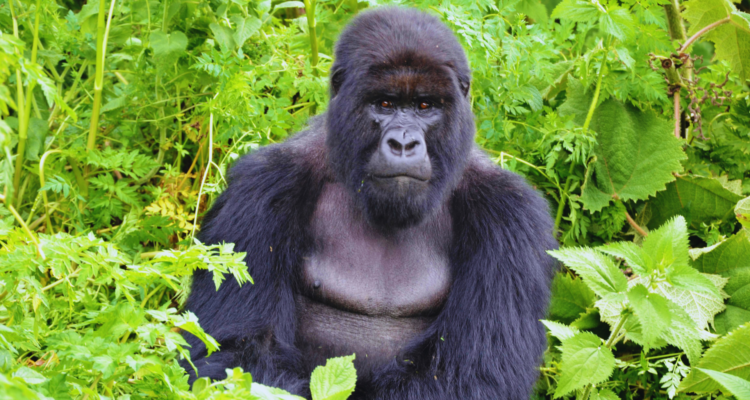
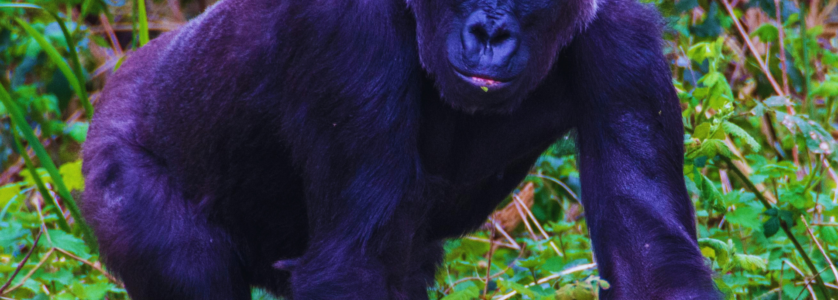
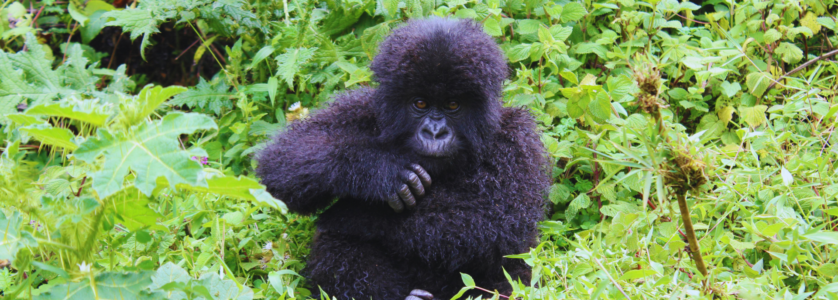
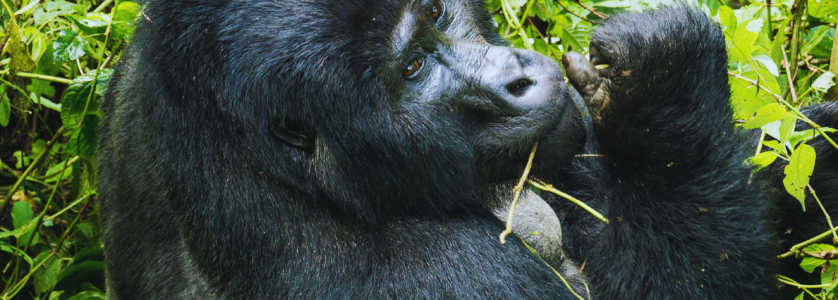
You are standing in a dark ravine. A 400-pound silverback is resting twenty feet away in the dense undergrowth. You raise your camera, frame the shot, and press the shutter.
Flash.
A blinding burst of white light cuts through the jungle. The silverback roars, beating his chest in a sudden display of aggression. The lead ranger immediately steps in, physically lowers your lens, and issues a stern warning. One more strike, and your trek is over.
This is the ultimate photographic nightmare. The high-altitude canopy of Bwindi Impenetrable Forest blocks up to 80% of ambient sunlight. Your subjects are covered in light-absorbing black fur. Yet, you are legally and ethically prohibited from using artificial light. The standard result for unprepared tourists? A $1,500 memory card full of blurry, noisy, unusable black shapes.
Succeeding at uganda gorilla trekking means mastering your camera’s low-light capabilities before you ever set foot on the mountain. As someone who has shot extensively in the darkest sectors of Bwindi and Mgahinga, I am giving you the field-tested sensor optimization strategies required to pull sharp, professional-grade images out of the darkness.
The Zero-Tolerance Flash Ban
Let’s be absolutely clear: flash photography is universally banned across all gorilla parks in Rwanda, Uganda, and the DRC.
Mountain gorillas are wild, powerful animals. Sudden bursts of artificial light trigger severe stress responses. It disorients them, disrupts their social dynamics, and can easily provoke a defensive charge from a dominant male. Rangers enforce this rule ruthlessly.
The Pre-Trek Failsafe Protocol:
Do not trust yourself to “just remember” to turn the flash off. In the adrenaline-fueled chaos of a wildlife encounter, mistakes happen.
- Menu Disable: Dive into your camera’s internal menu and permanently disable flash firing.
- The Tape Trick: If you are shooting on a prosumer body with a pop-up flash, place a strip of black gaffer tape directly over the housing. If the locking mechanism fails and it pops up, the tape blocks the strobe.
- Ditch the Speedlight: Leave external flashes at the lodge. Bringing one into the forest is dead weight and invites unnecessary scrutiny from the rangers.
Sensor Optimization: The High-ISO Reality
Forget everything you learned about keeping your ISO at 100. In the cloud forests of East Africa, fear of high ISO is your greatest enemy.
Modern Back-Illuminated (BSI) CMOS sensors found in full-frame mirrorless cameras (like the Canon R5, Sony a1, or Nikon Z8) are engineering marvels. They are designed to shoot in the dark.
The Contrarian Exposure Strategy
The old-school wildlife rule is to “Expose to the Right” (ETTR) to gather maximum light. In Bwindi, attempting ETTR drops your shutter speed to dangerous, motion-blur-inducing levels.
Instead, employ Strategic Underexposure. Shoot slightly dark (-0.3 to -0.7 EV) to maintain a fast shutter speed. You must freeze the gorilla’s micro-movements. Accept the digital noise. A sharp, noisy image can be saved in post-production using advanced AI denoising software (like Topaz Photo AI or DxO PureRAW). A blurry image is headed straight for the trash bin.
The Bwindi Canopy Matrix: Habitat-Specific Settings
Not all gorilla trekking uganda experiences are identical. The lighting conditions change drastically depending on which specific gorilla family you track, as they inhabit entirely different elevation zones and vegetation types.
Based on extensive field data, use this proprietary matrix to establish your baseline settings before the trackers clear the final brush.
| Gorilla Family / Sector | Typical Canopy Cover | Base Aperture | Minimum Shutter Speed | Estimated ISO Range |
| Rushegura (Buhoma) | Often open, edge of forest / gardens | f/2.8 – f/4.0 | 1/800s | 800 – 3,200 |
| Habinyanja (Buhoma) | Extremely dense, steep ravines | f/2.8 strictly | 1/500s | 6,400 – 12,800+ |
| Nkuringo (Nkuringo) | High altitude, mixed bamboo / thickets | f/2.8 | 1/640s | 3,200 – 8,000 |
| Nshongi (Rushaga) | Deep valley, heavy moisture, dark | f/2.8 strictly | 1/400s (Time your shots) | 8,000 – 12,800+ |
| Oruzogo (Ruhija) | Medium to dense understory | f/2.8 – f/4.0 | 1/640s | 4,000 – 10,000 |
Note: Shutter speeds must increase if juveniles are actively playing or moving rapidly.
Executing the Shot: Focus and Metering Tactics
When operating at ISO 10,000 in a dark jungle, your camera’s autofocus system will struggle. The contrast between a black gorilla and dark green foliage is minimal.
- Spot Metering is Mandatory: Switch your metering mode from Evaluative/Matrix to Spot Metering. Link the spot meter to your active focus point. Frame the shot so the meter reads directly off the gorilla’s face, ignoring the brighter highlights of the sky bleeding through the canopy above.
- Override Eye-AF: Animal Eye-Autofocus is incredible, until it isn’t. In low light, it often hunts aimlessly. If the Eye-AF fails to lock within two seconds, immediately switch to a single-point continuous focus mode (AF-C / Servo). Manually place the focus box on the pronounced ridge of the gorilla’s brow.
Shooting primates in the wild is a game of millimeters and fractions of a second. By fully embracing your sensor’s low-light limits and anticipating the specific canopy conditions of your assigned tracking sector, you eliminate the guesswork. Leave the flash behind, push your ISO, and capture the raw, unlit reality of the Virunga Massif.
Frequently Asked Questions
Why is flash photography banned during gorilla trekking?
Artificial flashes cause severe distress to wild gorillas. The sudden burst of light can temporarily blind them, disrupt their natural behavior, and agitate dominant silverbacks, potentially triggering a defensive charge against the trekking group.
What is the best lens aperture for dark jungle environments?
A fast lens is critical. You need an aperture of f/2.8 (found on professional 70-200mm or prime lenses) to gather enough ambient light. Lenses with a maximum aperture of f/5.6 or f/6.3 will force your ISO into unusable ranges or cause severe motion blur.
Can I use a continuous LED video light instead of a flash?
No. All forms of artificial illumination, including continuous LED panels, ring lights, and smartphone flashlights, are strictly prohibited in the national parks.
How do I fix the noise in my high-ISO gorilla photos?
Do not attempt to fix heavy noise using the built-in sliders in standard editing software, which often turns fur into plastic-looking mush. Export your RAW files into dedicated, AI-powered noise reduction software that rebuilds detail while stripping away chroma and luminance noise.