
Location Of Uganda’s Bwindi Impenetrable National Park: Where Is Bwindi National Park?

Situated in southwest Uganda on the edge of the Albertine Rift, the Bwindi Impenetrable Forest spans around 321 square kilometers and is between 1,190 to 2,607 meters above sea level, with 60% of it above 2,000 meters.
This stunning park in south western Uganda, with a misty forest, is located on the eastern edge of the western rift valley, adjacent to Congo’s Virunga National Park, on the eastern border of the Democratic Republic of the Congo.
The park includes both montane and even lowland forests in its lower reaches.
The largest settlement closest to Bwindi Impenetrable Forest National Park is Kabale town, the nearest major town, and the travel from there is roughly 29 kilometers long and takes two to three hours.
Bwindi Park’s geographic coordinates are 01°01′S 29°41′E, and the nearest international airport to Bwindi NP is Entebbe Airport, located about 460 kilometers away.
Bwindi National Park can also be accessed from Queen Elizabeth National Park, which takes about 3 to 4 hours by road.
Climate & Weather in Bwindi Impenetrable National Park
Despite having a tropical rainforest climate with an average rainfall of 1,400 to 1,900 millimeters annually because of its proximity to the equator, Bwindi Impenetrable National Park faces wet and cold weather.
The year-round temperatures at Bwindi Park are mostly constant.
The coldest months in Bwindi are June and July, with temperatures dropping to around 7°C at night, but during the daytime, it hovers around 20 to 27°C.
In Bwindi, the wet season lasts from September to November and even from March to May, while the dry seasons begin in June, August, and December to February, perfect for Uganda gorilla trekking tours.
In the morning, Bwindi Impenetrable National Park is typically shrouded in fog.
Bwindi Impenetrable National Park’s History
This forest reserve was renamed the Impenetrable Central Forest Reserve in 1964 after being recognized as an animal sanctuary to safeguard its mountain gorillas in a natural habitat.
In 1966, two forest reserves were added to this reserve, bringing its total size to roughly 321 kilometers. Both a forest reserve and an animal reserve were still in place in this park.
In order to save the endangered mountain gorillas and other rare animal species, Bwindi was made a national park in 1991.
In 1993, gorilla trekking was made a tourist attraction in Bwindi, and ever since, this protected area has grown to be one of Africa’s most visited travel destinations.
In 1994, the Bwindi Impenetrable National Park in south western Uganda received the UNESCO World Heritage Site designation.
The Bwindi Impenetrable National Park’s Main Tourist Attractions
The primary draw for many visitors to Bwindi National Park is the mountain gorillas. Nonetheless, Bwindi Park offers a plethora of breathtaking sights, such as the birds and lush foliage, to name just a couple.
The top attractions in the impenetrable forest reserve of Bwindi are.
Bwindi Impenetrable National Park’s Mountain Gorillas
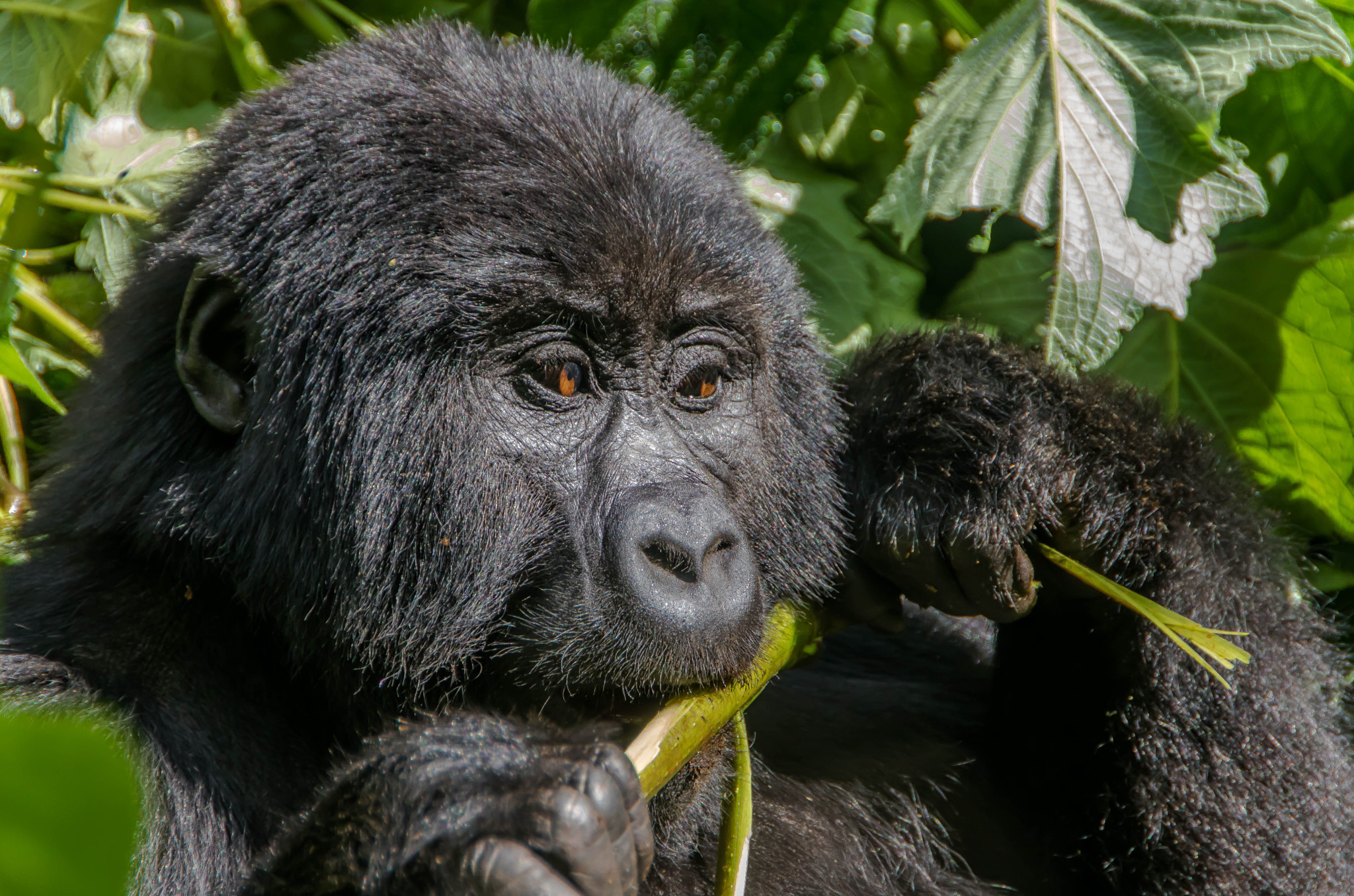
Only the misty alpine rain forests in the Albertine Rift Valley region are home to the charming, human-like primates known as mountain gorillas, an endangered species of gorilla.
Going on a gorilla trekking adventure in Bwindi Park is the finest way to see mountain gorillas, with the park hosting almost half of the world’s population.
What makes mountain gorillas unique? The dominant male, known as a dominant Silverback, leads each gorilla family, which is similar to how humans live, and this can be witnessed during a gorilla trek.
Even though endangered mountain gorillas are gigantic, they are gentle and down to earth, but don’t be tempted to prove it!
About 25 habituated gorilla families are available for gorilla excursions in Uganda’s Bwindi Park, which is home to half of the world’s mountain gorilla population.
In addition to mountain gorillas, fortunate visitors to the Bwindi Forest gorilla walk may see antelopes, forest elephants, chimpanzees, red-tailed monkey species, olive baboons, blue monkeys, and several other primate species.
Birds In the Impenetrable Forest of Bwindi
Bwindi Impenetrable Forest is a popular site for tourists on birding safaris in southwestern Uganda because of its abundant birdlife.
90% of the endemic bird species in the Albertine Rift Valley may be found in Bwindi, and 14 of the 350 species of birds that have been identified here are not found in other Ugandan national parks.
The greatest place to go on a montane birdwatching tour in Africa or see forest birds in Uganda is Bwindi Forest National Park.
IMPORTANT BIRD SPECIES TO WATCH FOR IN BWINDI PARK
1.The Neumann’s Warbler
2.Kivu ground-thrush
3.The green tinker bird from the West
4.Bee-eater in black
5.The Grauer’s Warbler
6.Charming Francolin
7.Batis Rwenzori
8.Unusual weaver
9.The regal sunbird
10.Turaco, Rwenzori Mountain Oriole
11.The bushshrike of Doherty
12.The dwarf honeyguide
13.The bar-tailed trogon
14.The Crimsonwing by Shelley
The Buhoma Area, Ruhija Neck, Mubwindi Swamp, and the Bamboo Zone—home of the Rwenzori Turaco—are where the majority of the birds in Uganda Bwindi Park may be seen.
The Residents of Bwindi Park
During your gorilla tours in Uganda, Bwindi, it’s worthwhile to explore the locals in addition to the gorilla treks.
The Batwa, or Pygmies, are the most notable people to visit in the Bwindi area.
They were the first people to live in Bwindi Park before it was designated as a park.
The Bakiga farmers are another ethnic group of locals who live on the outskirts of the park.
Please get in touch with us if you would like to participate in community walks, cultural performances, or interactions with the indigenous people of Bwindi.
Note: In order to save the rare mountain gorillas from extinction, the Batwa people were forced to leave Bwindi Impenetrable Park and even Mgahinga Gorilla National Park in 1991.
Bwindi Park’s Gorgeous Misty Forest
Bwindi Park’s foggy vistas are quite breathtaking!
The Bwindi Impenetrable Forest is home to the greatest diversity of plant species among East Africa’s dense forests, including those that are indigenous to the region.
Because of its varied altitude and different habitats, which are said to have served as a natural sanctuary (refuge) for wildlife during the Pleistocene era, Bwindi is home to a wide variety of tree species that house several wild animals.
Trees, including brown mahogany, Newtonia, Symphonia globulifera, red stinkwood, and East African yellow wood, are among those found in the Bwindi rain forest.
Monospora, Allophylus abyssinicus, Neoboutonia Macrocalyx, Teclea nobilis, Myrianthus holstii, and other species can be found beneath the canopy of the rain forest.
Taking guided woodland treks is the greatest way to experience the breathtaking natural splendor of the Bwindi jungle.
Expect to see more than 100 different types of ferns and cross a number of tiny rivers that flow into Lake Edward, including the Ishasha, Munyaga, Ntengyerere, and River Ivi.
Lake Mutanda
Lake Mutanda, near Bwindi Impenetrable National Park in south western Uganda, is a scenic volcanic lake within the western rift escarpment.
Surrounded by impenetrable forest, steep hills, and bird species, it offers canoe rides, cultural visits, and relaxation after a challenging gorilla trek.
Bunyonyi Lake Bwindi Impenetrable National Park
Lake Bunyonyi, close to Bwindi Impenetrable National Park, is a deep lake with 29 islands, terraced hills, and diverse bird species.
Its tropical forest surroundings provide tranquility for tourists, combining a gorilla trekking safari with cultural experiences, luxury lodges, and scenic canoe rides.
Visit Bwindi Forest National Park and see all these attractions firsthand during safaris in Uganda!
The Greatest Activities in Bwindi National Park
The two most popular tourist activities in Bwindi Impenetrable Forest National Park are gorilla trekking and bird watching. Bwindi Park also offers mountain biking rides, cultural interactions, and nature walks.
Trekking With Gorillas in The Impenetrable Forest of Bwindi
One of the most amazing African safari experiences is gorilla trekking, which is a highlight of the majority of safaris in Uganda.
This primary activity in Bwindi, the Uganda gorilla treks, attracts a lot of visitors to Bwindi Park who strive to get Uganda gorilla permits that cost $800 to come trek gorillas.
Around eight in the morning, a Uganda Wildlife Authority park ranger gives a briefing to trekkers with a gorilla permit before the gorilla trekking adventure begins.
You will come across a variety of exotic animals in Bwindi Park, such as birds and colorful birds, while trekking with mountain gorillas in the jungle.
In Bwindi Impenetrable National Park, the majority of mountain gorilla tracking excursions last 30 minutes to 6 hours, depending on the location of the gorilla family after starting the trek in the thick forests.
Visitors are allowed a maximum of one hour to observe gorillas once they are found in their gorilla habitat.
When photographing members of the mountain gorilla family, you should use a flashless camera and steer clear of the animals’ eyes.
AREAS IN BWINDI IMPENETRABLE NATIONAL PARK FOR GORILLA TREKKING
- The Buhoma sector, home to seven habituated gorilla families, is the primary gorilla tracking area in Bwindi.
- Ruhija Sector: located near Bwindi Park’s most northern tip or point, with four habituated gorilla families
- The Nkuringo region with four gorilla families
- The Rushaga sector with 10 gorilla families in the tropical forest
25 GORILLA FAMILIES IN BWINDI PARK WITH HABITS

The 19+ habituated gorilla groups in Bwindi Park available for a gorilla trekking experience are as follows:
1.The Muyambi Gorilla Family
2.The Gorilla Family on Christmas
- Group of Mucunguzi Gorillas
4.The Posho Gorilla Family
5.The Kutu Gorilla Family
6.The Gorilla Family of Biyindo
7.Gorilla Group Bikingi
- The Bitukura Gorilla Group
9.Group of Bushaho Gorillas 10
- Family of Bweza Gorillas
11.The Gorilla Family of Busingye
12.Family of Habinyanja Gorillas
13.Group of Katwe Gorillas
14.Group of Kyagurilo Gorillas
15.The Gorilla Family of Kahungye
16.The Gorilla Family of Mukiza
17.The Mishaya Gorilla Family
18.The Mubare Gorilla Family was Bwindi’s first gorilla family.
19.Group of Rushegura Gorillas
20.The Shongi Gorilla Family
21.The Gorilla Family of Oruzogo
22.Group of Nkuringo Gorillas
Experience with Gorilla Habituation in Bwindi Park
In contrast to gorilla trekking, the gorilla habituation experience in Bwindi Impenetrable National Park allows for lengthier encounters with mountain gorillas.
Participants in this incredible encounter spend more than four hours in the jungle with the gorillas while accompanied by researchers, medical professionals, and trackers.
Families of gorillas undergoing habituation are used for this experiment.
For clients conducting mountain gorilla research, we typically suggest this expedition.
Anticipate a thorough exploration of the world’s most remarkable gorilla behaviors.
Only at Bwindi Forest National Park in Africa is it possible to have this unforgettable gorilla experience because DR Congo and Rwanda don’t have it.
THE PRICE OF UGANDA GORILLA TREKKING AND HABITUATION IN BWINDI PARK
In Uganda, Bwindi Impenetrable National Park, a gorilla safari permit costs $800 for non-residents, while a gorilla trekking ticket costs $700 for foreigners.
Every East African national who wants to go on a gorilla hike in Bwindi Park must pay 300,000 UGX for a gorilla permit. In Bwindi, the Gorilla Habituation experience costs $1500.
Gorilla trekking permits are limited to only eight people per gorilla family per day.
Important considerations before reserving a mountain gorilla permit in Bwindi Park, Uganda
- We recommend that visitors on gorilla safari trips in Uganda’s Bwindi Impenetrable Forest reserve their gorilla permits at least three to six months in advance of the start of their journey due to high demand.
- Only visitors who are at least 15 years old are granted gorilla permits in Uganda!
Additional Activities for Visitors in Bwindi Impenetrable Forest National Park
Beyond gorilla safari trips, Bwindi Impenetrable National Park offers a variety of other safari activities. Below is a discussion of further activities:
Bwindi Forest National Park Bird Watching
Bwindi Impenetrable National Park is referred to by the Ugandan birders as a birding safari heaven!
The majority of Uganda’s forest birds and 90% of the endemics of the Albertine Rift Valley may be found in Bwindi Park. It’s Africa’s best place to see mountainous bird species.
The Buhoma region, Ruhija Neck, the Bamboo zone area, and Mubwindi swamp—home of Grauer’s Broadbill—are among the areas you will see on a Bwindi birding-watching excursion.
Neumann’s Warbler, Handsome Francolin, Doherty’s bushshrike, Regal Sunbird, Bar-tailed Trogon, Brown-necked Parrot, and Black bee-eaters are some of the noteworthy birds in Bwindi Park.
One of the top birding guides in Uganda will be assigned to you if you reserve your Ugandan birding tour in Bwindi through us.
Bring bottled water, a sunhat, binoculars, and a camera for this adventure.
It costs $40 to go birdwatching in Bwindi, and you can do it all year round.
Bwindi Park Nature Walk
Guided forest treks are the most effective method to experience Bwindi Forest National Park. An armed park ranger leads each of these treks, which begin at park headquarters, and ensures that visitors are safe in this ancient rain forest.
Although there are forest walks in each of Bwindi’s four sectors (Buhoma, Nkuringo, Rushaga, and Ruhija), the finest experience is had on guided treks in the Buhoma sector.
Expect to see a wide variety of animals, including exquisite plant and flower species, primate species, butterflies, and several bird species, during this guided stroll in this breathtaking foggy woodland.
You will discover during the walk why this forest was given its name—the Impenetrable Forest Bwindi, which means “place of darkness” in the local dialect!
Certain pathways and steep hills lead you through picturesque rural areas where you can engage with locals and learn about their everyday lives.
The other popular hike is the Buhoma Forest trail, which leads through lush trees, ferns, and stunning orchids as it enters the center of Bwindi.
It comes to an end at a stunning waterfall with crystal-clear water.
Your guide will share information about the native herbs you may encounter during the trip.
You can anticipate seeing endangered animals that are unique to this planet!
Enjoying Bwindi Park’s Cultural Experience
Although it can be done either way, Ugandan cultural activities in Bwindi Impenetrable Forest National Park are typically done after the gorilla trekking adventure!
It aims to provide visitors doing Ugandan gorilla trekking tours in Bwindi Park with an opportunity to learn about the customs and livelihoods of the Bakiga and Batwa people, their endearing beliefs, rituals, and traditions of the locals.
These community-based tourism activities also focus on sustainable development and cultural heritage preservation in Bwindi NP.
The following are typical cultural interactions in Bwindi Impenetrable National Park:
CULTURAL EXPERIENCES IN BATWA
Before the government gazetted the area to protect wildlife, especially the endangered mountain gorillas, the Batwa (the Pygmies) were the original inhabitants of Bwindi Forest National Park.
These Batwa people practiced an ancient hunter-gatherer lifestyle in the Bwindi for thousands of years before their eviction. Now they only reside outside of Bwindi Park after being forced out of the forest when the area was gazetted as a national park.
Visitors on these cultural tours often get the opportunity to learn about one of the native African tribes during the Batwa cultural event, witness their traditional lifestyle, including house building and local dance.
The Pygmies use storytelling, dance, and theater to showcase their cultural past and traditional way of life.
VILLAGE WALKS
A once-in-a-lifetime opportunity to interact with the locals who live near this UNESCO World Heritage Site is provided by the village walks in Bwindi Forest National Park.
The Bakiga people are the dominant group in this region.
In addition to being excellent farmers, the Bakiga people have a rich cultural history that is worth discovering. They have a wonderful and distinctive traditional dance and manner of life.
Tourists explore traditional doctors, blacksmiths, and schools while on the community stroll.
At a particular craft center, you can also learn how to make local beer, cook local food, and weave local goods while on this tour.
The Buhoma Village walk is a popular option for tourists to engage with local households and learn about their culture and practices.
Due to their familiarity with local customs, beliefs, and traditions, local guides are typically hired for village walks.
Bwindi Forest National Park Mountain Biking
Another option for escorted woodland walks in Bwindi Impenetrable woodland National Park is mountain biking.
For visitors interested in cycling trips, such as Ride 4 a Woman in the Buhoma area, the majority of lodging establishments in Bwindi hire bicycles.
Not to mention that only the Buhoma area of Bwindi Forest National Park enjoys riding!
You can take a bike to the stunning Ivi River route from Buhoma Park headquarters.
Additional safari pursuits in the vicinity of Bwindi Impenetrable National Park
- Lake Mutanda canoeing
- Examining Lake Mutanda, a historic island
Visit Uganda’s Bwindi today and enjoy all these firsthand!
Uganda Safari Packing List for Bwindi Impenetrable National Park Gorilla Trekking

Given that gorilla tracking is the primary activity, the packing list we will provide here is appropriate for this experience and crosses over into the majority of the park’s activities.
The packing list for gorilla safari trips in Uganda’s Bwindi Park is provided below:
- A rain poncho or rain jacket
- Boots for the jungle. Sandals are perfect for lounging at your lodging in the evening.
- The camera
- A cozy jumper
- When trekking with gorillas, wear garden gloves to protect your hands.
- Daypack
- When hiking in the rather high hills above sea level, bottled water helps you stay hydrated.
- Easy snacks or a lunchbox
- A gorilla permit for gorilla trekking
- A basic medical kit
- Repellent for insects
- Sunglasses
- Sunscreen and a sunhat
What Should I Wear in Uganda’s Bwindi Impenetrable National Park?
Wearing long-sleeved shirts and slacks is recommended for visitors to Bwindi Forest National Park
Stay away from shorts! The majority of the day is cloudy and chilly in the highland region of Bwindi Park!
Therefore, wearing clothing that is appropriate for the gorilla trek or any other woodland trail, such as when birdwatching, will keep you warm and prevent cuts to your body.
Garden gloves also help keep you warm, and most tourists wear heavy sweaters on chilly mornings.
Your feet are protected when hiking in the wild by the jungle boots.
Bwindi Impenetrable National Park’s Best Place to Stay
Accommodations at Bwindi Impenetrable National Park are selected based on the sector from where you plan to monitor gorillas with the Buhoma sector being known for having the greatest number of accommodation options in Bwindi.
Because Bwindi Forest National Park offers budget, midrange, and luxury lodges, bandas, and campsites in each location, the type of lodge you choose depends depend on your budget.
The top lodges in Bwindi Impenetrable National Park are listed below.
- Buhoma sector: Buhoma Lodge, Sanctuary Gorilla Forest Lodge, Mahogany Springs (one of Bwindi’s beautiful luxury lodges)
- Nkuringo sector: Clouds Mountain Gorilla Lodge (luxury), Nkuringo Safari Lodge (luxury lodges)
- Ruhija sector: Various lodges (mixed feedback)
Others are Buhoma Community Rest Camp, Resort at Mutanda Lake, The Engagi Lodge, Ichumbi Gorilla Lodge, etc.
Choose your accommodation based on the trek starting point and desired experience. Each sector offers unique experiences.
Please note that most visitors opt to stay in accommodation around Buhoma, which is popular for its accessibility and options.
Book and reserve your stay at any of these lodgings and more in advance for comfortable tours!
The Best Time to Go to Uganda‘s Bwindi Impenetrable National Park
Although they are possible all year round, gorilla safari tours in Uganda’s Bwindi Forest National Park are best taken during the dry season from December to February and June to September.
Because there is little rainfall during the dry season (February–December & June–September), gorilla trekking conditions are great and temperatures are nice, providing avenues to see a dominant silverback protecting its territory or gorilla family members feeding, etc.
But trekkers need to understand that to get a gorilla permit during the dry months might be strenuous, so book in advance.
The months of March through May and October through November often see the most rainfall in Bwindi Impenetrable Forest National Park, with an average annual rainfall range from 1,400 to 2,390 millimeters, with long hours of soft drizzle being common.
It usually takes less time to track gorillas during rainy months since they don’t venture farther into the jungle in search of food, which is abundant.
Visitors who come during the rainy season (low season) can save money on lodging and the majority of travel-related goods.
Note: This also holds true for other Ugandan national parks, including Murchison Falls Park, Mgahinga National Park, and Queen Elizabeth National Park.
How To Travel to Uganda’s Bwindi Impenetrable National Park?
Road or plane transportation are options for visitors on gorilla trekking trips in Bwindi Forest National Park, Uganda. However, taking the road is the most impressive method to get to Bwindi Park.
Accessing Bwindi National Park by Road
The majority of safaris from Uganda to Bwindi depart from Entebbe or Kampala with several different routes converging near Butogota, 17 kilometers north of the park entrance.
There are daily buses operating from Kampala to Kabale, Kisoro, and Rukungiri with several stops along the Kampala-Mbarara-Kabale road. This drive takes roughly 10–11 hours (a full day) before connecting to Bwindi Park.
Photographing at the Equator monument in Kayabwe and Lake Mburo Park are frequent stops along this route.
Bwindi can also be reached by car from Queen Elizabeth National Park, and the trip takes between four to six hours, but from Ishasha in Queen Elizabeth Park to Bwindi typically takes around 2 hours.
Bwindi is also reachable from Kigali, Rwanda; the trip from Kigali International Airport takes about 4 to 6 hours, depending on the sector.
During rainy seasons, drive a 4WD car.
Traveling To Bwindi Park, Uganda by Air
This is appropriate for tourists who are time-sensitive and detest lengthy drives!
Luxury tourists typically take the Uganda gorilla flying safaris to Bwindi.
Domestic flights by Fly Uganda and Aerolink, operating daily flights, will take you from Entebbe Airport or Kajjansi Airstrip to Kihihi and Kisoro airstrips in the Buhoma district, where you will board a tour vehicle to enter the park.
FAQs Regarding Impenetrable National Park in Bwindi
What Is the Notoriety of Bwindi Impenetrable National Park?
The Great Gorillas, which make up about half of the world’s population, are the reason Bwindi Park is so well-known.
The biodiversity of this World Heritage Site, which includes more than 120 mammal species, 350 bird species, 160 tree species, and 100 fern species, is another reason for its popularity.
In Bwindi Impenetrable National Park, How Many Gorillas are There?
There were about 459 gorillas in Bwindi Park as per the most recent mountain gorilla census in 2018; however since then, more kids have been born.
As a result, a significantly larger population is anticipated today.
Which Season Is Best for Seeing Gorillas in Bwindi National Park?
In Bwindi Impenetrable Forest National Park, gorilla trekking is most enjoyable during the dry months.
The gorilla trek track is often dry during these months because there is typically little rainfall and sunshine for the majority of the day, perfect for trekkers seeking to see gorillas after getting a gorilla permit.
What Is the Price of Admission to Bwindi Impenetrable National Park?
The gorilla trekking permit includes admission to Bwindi Forest National Park.
For non-foreign residents, it is $800; for foreign residents, it is $700; and for East African citizens, it is $300,000.
What Is Bwindi Impenetrable National Park’s Main Tourist Attraction?
The primary tourist attraction in Bwindi Park is the mountain gorillas.
Since Bwindi is a great place to observe birds, seeing birds at Bwindi Park is also a beautiful experience.
Is the Impenetrable Forest in Bwindi Safe?
Every activity, including gorilla tracking safaris in Bwindi, Uganda, is safe.
Armed Park rangers from the Uganda Wildlife Authority will accompany you as you explore this lush rainforest, making sure visitors are safe.
Does Malaria Exist in Bwindi?
Given that it is a tropical jungle, mosquitoes may be present, so for protection, apply bug repellent at all times.
Why Is Bwindi Forest Considered Unbreakable?
- The name Bwindi Impenetrable Forest comes from the Rwakitura phrase Mubwindi, which signifies a location full of darkness.
- This park, which is only accessible on foot, has lovely, expansive bamboo stands scattered throughout the wide hardwood forest that makes it quite unbreakable.
- Africa’s Bwindi Impenetrable National Park is a must-visit location for gorilla tours!
- Half of the world’s mountain gorillas live in Uganda’s Bwindi Impenetrable Forest National Park.
- In addition to the Bwindi Mountain gorillas, this park is a great place for Ugandan walking safaris, cultural tours, and birding safaris.
- Lucky tourists may be able to see rare wildlife species during their stay that are difficult to see in other African protected areas.
Conclusion
Bwindi Impenetrable NP shelters half the world’s mountain gorillas in ancient montane forests, offering thrilling treks, Batwa heritage, and 350 bird species. For a gorilla excursion in Uganda’s Bwindi Park, get in touch with our staff to secure your transformative safari!

Over 300 excellent reviews on TripAdvisor
Over 50 excellent reviews on Safaribookings.
Over 50 excellent reviews on Safaribookings.
12+ years of experience.
Best price guarantee.

Cate

Samuel
Speak to a safari specialist to plan your customized Uganda safari and East African tours...
Get top notch safari advice: Call us or schedule a video meeting with our experts.