
Nestled in the heart of northern Tanzania, Arusha National Park, often called Tanzania Arusha National Park, is a compact yet captivating destination that offers breathtaking scenery, diverse wildlife, and unique activities.
Located just a short drive from Arusha city, the safari capital of Tanzania, this small park spans 552 square kilometers and is a perfect introduction to Tanzania’s northern safari circuit, which includes iconic destinations like Serengeti, Ngorongoro Crater, and Lake Manyara.
With Mount Meru, the second-tallest mountain in Tanzania, as its centerpiece, the park boasts lush forests, shallow alkaline Momella Lakes, and the stunning Ngurdoto Crater, making it a must-visit for travelers seeking adventure, wildlife, and natural beauty.
Whether you’re planning a day trip from Arusha or a multi-day adventure, Arusha National Park offers unforgettable experiences like walking safaris, game drives, canoe trips, and climbing Mount Meru.
This guide covers everything you need to know about this remarkable park, from its history and wildlife to the best activities and accommodations, ensuring your Tanzania safari is a trip of a lifetime.
Where Is Arusha National Park Located?
Arusha National Park is situated in northern Tanzania, approximately 25 km northeast of Arusha town and 35 km from Kilimanjaro International Airport.
Its proximity to these hubs makes it one of the most accessible parks in Tanzania, ideal for a short safari or as the starting point for longer northern circuit safaris.
The park lies along a 300-kilometer axis that connects some of East Africa’s most famous Tanzania national parks, including Serengeti, Ngorongoro Crater, and Lake Manyara, offering a compact showcase of Tanzania’s diverse landscapes and wildlife.
Key Facts About Arusha Park
- Location: Northern part of Tanzania, 25 km from Arusha city, 35 km from Kilimanjaro Airport
- Size: 552 square kilometers
- Established: 1960 as Ngurdoto Crater National Park, renamed Arusha National Park in 1967
- Name Origin: Derived from the Wa-Arusha people, the area’s original inhabitants
- Notable Features: Mt. Meru, crater-Ngurdoto, Momella waterscapes, Serengeti Ndogo (Mini Serengeti)
- Ecosystems: Lush forests, savannahs, wetlands, alpine vegetation, and lakes
- Wildlife: Home to giraffes (world’s largest population), zebras, cape buffalo, white colobus monkeys, blue monkeys, elephants, and more
- Birdlife: Over 400 bird species, including flamingos, turacos, and African fish eagles
- Activities: Walking safari, game drives, canoeing, birdwatching, and climbing Mount Meru
- Altitude: Ranges from 1,400 m to 4,566 m at Mount Meru’s summit
History of Arusha National Park
Arusha National Park was established in 1960 as Ngurdoto Crater National Park and renamed in 1967 to reflect its expanded boundaries, which now include Mt. Meru and the Momella Waterscapes. The park’s name honors the Wa-Arusha people, the area’s original inhabitants.
In 1876, Hungarian explorer Count Teleki documented the region’s rich wildlife, including hippos and rhinos.
In the early 20th century, the Trappe family used parts of the park as a cattle ranch, with Mrs. Trappe, East Africa’s first female professional hunter, donating land to create a game reserve.
Post-independence, the Tanzanian government, through TANAPA, invested heavily in transforming Arusha National Park into a top-tier tourist destination.
Today, it’s a vital conservation area and a key stop on Tanzania’s northern safari circuit, offering a unique blend of history, culture, and natural beauty.
Geography and Landscapes of Arusha Park
Arusha National Park is a geological and ecological marvel, featuring three distinct zones:
- Ngurdoto Crater: Known as “Little Ngorongoro,” this extinct volcanic caldera is 3.2 km wide and 300 m deep, with a marshy floor surrounded by lush jungles. It’s home to buffalo, elephants, warthogs, and various bird species.
- Momella Lakes: A series of seven shallow alkaline lakes in the north east, formed by volcanic activity, these lakes shimmer in shades of green and turquoise due to varying mineral content. They attract flamingos, pelicans, and other waterfowl.
- Mount Meru: Tanzania’s 2nd-highest peak/mountain at 4,566 meters, this active volcano features a dramatic caldera, alpine flora/vegetation, and mountain streams like the Jekukumia River (South East).
The park’s compact size belies its diverse ecosystems, from savannahs and wetlands to lush jungles and volcanic landscapes, offering spectacular views of both Mt. Meru and Mount Kilimanjaro on clear days.
Climate and Weather in Arusha National Park
Influenced by Mt. Meru, Arusha National Park enjoys a mild, tropical mountain climate. Daytime temperatures range from 20°C to 30°C, while nights can dip to 10°C, especially at higher elevations.
The dry season (June to October) offers clear skies, ideal for a walking safari, game drives, and climbing Mt. Meru.
The wet seasons (March to May and October to December) bring lush greenery and migratory bird species, but heavy rains may disrupt outdoor activities. Early-day/morning safaris require warm layers due to cooler temperatures.
Wildlife and Biodiversity in Arusha National Park
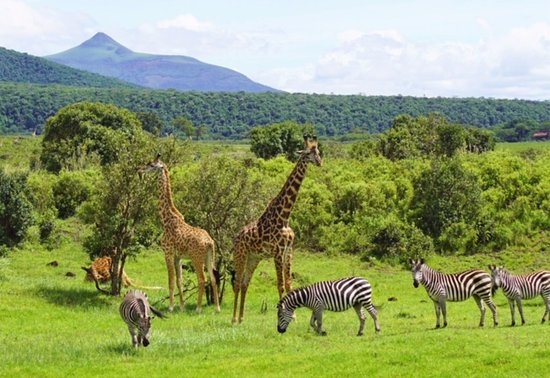
Arusha National Park is a sanctuary for diverse wildlife species and vibrant ecosystems. Key highlights include:
- Mammals: The park hosts the world’s biggest population of giraffes, along with zebras, buffalo, elephants, warthogs, hippos, waterbucks, dik-diks, and primates like black and white colobus monkeys and blue monkeys. While lions are absent due to dense forests and limited prey, leopards and spotted hyenas are occasionally spotted.
- Birdlife: With over 400 bird species, the Arusha NP is a birdwatcher’s paradise. Momela lakes attract pink flamingos, pelicans, African fish eagles, Augur buzzard, Bar-tailed trogons, Bearded vulture, and herons, among other many bird species, while forest trails reveal forest species like turacos, hornbills, and raptors like the African fish eagle.
- Serengeti Ndogo: This “Mini Serengeti” is an open grassland where elephants, giraffes, and zebras graze, offering excellent game viewing.
- Ngurdoto Crater: A haven for buffalo, warthogs, and monkeys, with a marshy floor teeming with birdlife.
- Ujambo wa Mbogo: A marshy glade frequented by cape buffalo, giraffes, and warthogs, ideal for walking tours.
Other Top Attractions in Arusha National Park Tanzania
- Mount Meru
Mount Meru, an active volcano standing at 4,566 meters, is Tanzania’s second-highest peak. Last erupting in 1910, it features a vast caldera and offers spectacular views of Mount Kilimanjaro and the park below.
Climbing Mt. Meru is a challenging 3–4 day adventure through lush jungles, mountain streams, and alpine vegetation, with sightings of colobus monkeys and blue monkeys.
- Ngurdoto Crater
Dubbed “Little Ngorongoro,” this extinct caldera is surrounded by lush jungles and hosts buffalo, elephants, and various birds. Accessible only via walking safaris with an armed park ranger, it offers an intimate glimpse into the African bush.
- Momella Lakes
These seven shallow alkaline lakes in the northeast are a birdwatcher’s dream, attracting flamingos, pelicans, and Egyptian geese. Canoe trips on Small Momella Lake provide a serene way to spot wildlife and enjoy breathtaking views of Mount Meru.
- Serengeti Ndogo (Mini Serengeti)
This open grassland near the park’s main gate is perfect for game viewing and walking safaris. Expect to see giraffes, zebras, African bush elephants, and buffalo grazing in this compact version of the Serengeti.
- Ujambo wa Mbogo
Translated as “Buffalo Glade,” this marshy area is a hotspot for cape buffalo, giraffes, and warthogs. It’s a prime location for walking safaris with an armed ranger.
- Tululusia Hill and Waterfall
The Hill at Tululusia offers stunning views of Mount Kilimanjaro and the park’s landscapes. The 28-meter Tululusia Waterfall is a refreshing stop for hikers, surrounded by lush jungles and wildlife.
- Fig Tree Arch
A natural wonder formed by a strangler fig, this arch is large enough for a safari vehicle to pass through. It’s a popular photo spot during walking safaris or safari drives.
- Ngurdoto Museum
Located near Ngurdoto Crater, this museum showcases the park’s plant species, wildlife, and ecological diversity, making it an educational stop for visitors.
Fun Activities in Arusha National Park
Safari Drive
Game drive safaris are a popular activity in Arusha NP, offering sightings of giraffes, zebras, and buffalo in areas like Serengeti Ndogo and Ngurdoto Crater. Early morning or afternoon drives provide the best wildlife encounters and beautiful scenery.
Walking Safari
Unlike many other parks in the nation, Arusha offers walking safaris, a great alternative to traditional safari experiences led by an armed park ranger. Explore Ngurdoto Crater, Ujambo wa Mbogo, or the hill at Tululusia for close encounters with giraffes, colobus monkey species, and Avian species.
Canoeing
Canoe trips on Small Momella Lake in Arusha NP offer a tranquil way to spot hippos, flamingos, and grazing animals along the shore, guided by a trained professional guide.
Climbing Mount Meru
A 3–4 day trek to Mount Meru’s summit is a thrilling and popular adventure in Arusha NP, passing through lush jungles, mountain/hilly streams, and the Miriakamba Hut. The summit offers breathtaking views of Mt. Kilimanjaro, Ash cone, and the Meru Crater funnels. This activity is considered more challenging and beautiful than climbing Mt. Kilimanjaro.
Birdwatching
With over 400 Avian species, Arusha is a top destination for birdwatchers. Spot flamingos at Momella waterscapes, turacos in the forests, and raptors soaring over the crater at Ngurdoto.
OTHER ARUSHA PARK ACTIVITIES
- Horseback Riding
Horseback riding safaris can be carried out along different trails in Arusha NP before visiting the park, allowing you to explore the African bush while spotting giraffes and zebras, with Mount Meru as a dramatic backdrop.
- Cycling Safaris
Cycle through the park’s trails, passing lush jungles and open plains, for an active way to experience the park’s wildlife and scenery.
- Nature and Wildlife Photography
Photographers will love capturing the park’s incredible views, from the misty crater at Meru to the vibrant Momella waterscapes. Early morning and sunset provide ideal lighting for wildlife shots.
- Maasai Cultural Visits
Visit nearby Maasai communities to learn about their traditions, herding practices, and connection to the land, complementing your wildlife safari.
- Coffee Tours
Explore coffee plantations near Mount Meru to learn about Tanzania’s coffee production, sample fresh brews, and enjoy scenic views.
- Arusha City Tours
Discover Arusha town, the safari capital, with visits to markets, museums, and the iconic clock tower marking the center of East Africa.
- Waterfall Hikes
Hike to Tululusia Waterfall or other scenic falls near Mount Meru for a refreshing adventure amidst lush surrounding forest and volcanic landscapes.
Best Time to Visit Arusha National Park for Tanzania Safaris
- Dry Season (June–October): Ideal for game viewing of the many animals in the park, walking trips, and climbing Mt. Meru due to clear trails and shorter vegetation.
- Birdwatching (November–April): Migratory birds arrive at Momela Lakes, making it a prime time for birding. Please note, birdwatching can be done year-round.
- Wet Seasons (March–May, October–December): Lush greenery and fewer crowds, but heavy rains may disrupt activities.
How to Get to Arusha National Park?
Arusha National Park is highly accessible among all other national parks in the country via:
- By Air: Fly into Kilimanjaro International Airport (45 minutes away) or Arusha Airport for domestic flights from Dar es Salaam or Zanzibar.
- By Road: A 30–45 minute drive from Arusha city, or 1–2 hours from Moshi. Safari vehicles, public buses, or taxis can take you to the park’s main gate.
- NB: Public transport and taxis can be hired to reach accommodations close to the park from the town of Arusha.
The Best Accommodations in Arusha National Park
Arusha National Park offers a range of accommodations, from luxury lodges to budget options, many located just outside the park for easy access to view wildlife in Arusha National Park during safari drives:
Luxury
- Legendary Lodge: A five-star retreat on a coffee estate with stunning views.
- Gran Meliá Arusha: Modern luxury with easy access to the park.
- Kili Villa: Exclusive villas with horseback riding and game drives.
- Lake Duluti Lodge: Serene lakeside luxury near Mount Meru.
Mid-Range
- Rivertrees Country Inn: A rustic former coffee farm with cozy cottages offering unique experiences close to Arusha National Park.
- Ngare Sero Mountain Lodge: Colonial charm with lush surroundings.
- Kiboko Lodge: Comfortable retreat at the park’s edge.
Budget
- Green Mountain Hotel: Affordable and close to Arusha.
- Arusha Backpackers Hotel: Basic but convenient for budget travelers.
- Outpost Lodge: Cozy and cost-effective near the park.
Many accommodations in Arusha National Park offer or organize guided nature walks, horseback riding, and game drive safaris, ensuring a seamless safari experience.
Safari Costs in Arusha National Park (2026)
- Entry Fees: USD 50/adult/day, USD 15/child (5–15 years), TZS 5,000–10,000 for Tanzanian residents
- Vehicle Entry: USD 40–50 for foreign-registered vehicles
- Armed Park Ranger (Walking Safari): USD 20–30/person
- Mount Meru Climb (3–4 days): USD 800–1,200 (includes guides, porters, fees)
- Canoeing: USD 60/person
- Game Drive Trips: USD 150/day in a group safari vehicle
- Accommodation: USD 30 (budget) to USD 400+ (luxury) per night
- Tour Packages: USD 150–300/day, including transport, guide, and meals
Contact a reputable tour operator for tailored quotes and seamless planning. Some of these include.
Rules and Regulations to Abide by in Arusha NP
- Always be accompanied by a licensed guide or armed ranger.
- No off-road driving or littering.
- Maintain a safe distance from wildlife.
- Stick to designated trails during walking trips.
- Avoid loud noises to respect the park’s tranquility.
Tanzania Packing List for Arusha National Park Tours

- Comfortable hiking shoes
- Lightweight, breathable clothing
- Warm layers for morning or high elevations
- Binoculars and a camera
- Sunscreen and insect repellent
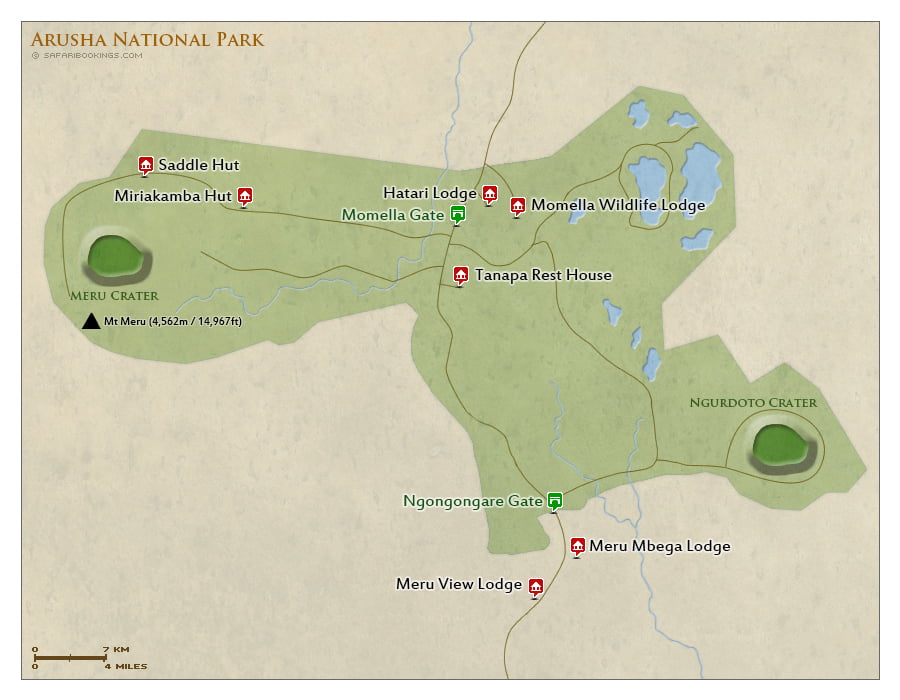
Arusha National Park Map
Arusha National Park FAQs
What Is Arusha Known For?
Arusha city, often called the safari capital of Tanzania, is the gateway to the northern safari circuit, including Arusha National Park, Serengeti, and Ngorongoro Crater.
It’s home to Kilimanjaro International Airport, vibrant markets, and cultural landmarks like the clock tower, marking the center of East Africa. Arusha is a hub for safari planning and cultural exploration.
Are There Lions in Arusha National Park? | Why Are There No Lions?
Arusha National Park has no resident lion population. The park’s dense forests and limited open plains make it less suitable for lions, which prefer larger territories with abundant prey. However, leopards and spotted hyenas are occasionally seen, adding a thrill to game drives and walking trips.
Can You See Kilimanjaro from Arusha National Park?
Yes, on clear days, Mt. Kilimanjaro, Africa’s highest mountain, is visible from Arusha National Park, especially from Tululusia Hill or during game drives, offering stunning photo opportunities.
What Is the Most Famous Park in Tanzania?
While Serengeti National Park is Tanzania’s most famous for its vast savannahs and the Great Migration, Arusha National Park shines for its accessibility, unique walking trips, and proximity to Arusha city and Kilimanjaro International Airport.
What Is So Special About Arusha National Park?
Arusha National Park stands out for its incredible diversity within a compact area. Unlike larger parks like Serengeti, it offers a unique combination of walking tours, canoe tours, and mountain climbing, all set against incredible views of Mount Meru and Mt. Kilimanjaro.
The park is home to the world’s largest population of giraffes, rare blue monkey, black and white colobus monkey species, and over 400 bird species, making it a haven for wildlife enthusiasts and birdwatchers.
Its proximity to Arusha and Kilimanjaro International Airport makes it an ideal day trip destination or a starting point for exploring Tanzania’s famous safari parks in the northern circuit.
Plan Your Arusha National Park Adventure
Arusha National Park is a versatile destination, perfect for a day trip or as part of longer northern circuit safaris. Its diverse landscapes, from the crater at Meru to the Momela Lakes, combined with unique activities like walking tours and canoeing, make it a standout among Tanzania’s national parks.
Whether you’re marveling at black and white colobus monkeys, paddling past flamingos, or summiting Mount Meru, this park promises unforgettable memories.

Over 300 excellent reviews on TripAdvisor
Over 50 excellent reviews on Safaribookings.
Over 50 excellent reviews on Safaribookings.
12+ years of experience.
Best price guarantee.

Cate

Samuel
Speak to a safari specialist to plan your customized Uganda safari and East African tours...
Get top notch safari advice: Call us or schedule a video meeting with our experts.