Home » RWANDA NATIONAL PARKS – RWANDAN NATIONAL PARKS RWANDA NATIONAL PARKS – RWANDAN NATIONAL PARKS
Beautiful habitats and well-protected species can be found in the Rwanda National Parks! Nyungwe Forest National Park, Volcanoes National Park, Akagera National Park, and Gishwati Mukura National Park are among the national parks in Rwanda.
Rwanda has just four national parks and wildlife reserves in its different corners that are home to some of the most remarkable flora and fauna worth seeing during safari holidays.
The Rwanda Development Board (RDB) manages and cares for Rwanda's national parks with assistance from other government agencies. Additionally, it promotes all the national parks in Rwanda. Every park has its own distinct habitat and species.
The oldest and busiest park in Africa is Volcanoes National Park in Rwanda. It is bordered by the Virungas, Uganda, and the Democratic Republic of the Congo. It is the only site in the world where mountain gorillas can reside, together with parks in neighboring nations.
The number of gorillas in Volcanoes Park has been growing over the past 20 years. Golden monkeys also live there.
Located southeast of the Burundi border, Nyungwe National Park is Rwanda's other well-known national park and a fantastic place to go on chimpanzee safaris.
Numerous primate species, such as Olive Baboons, Silver Monkeys, Red-tailed Monkeys, and Blue Monkeys, can be found in this park.
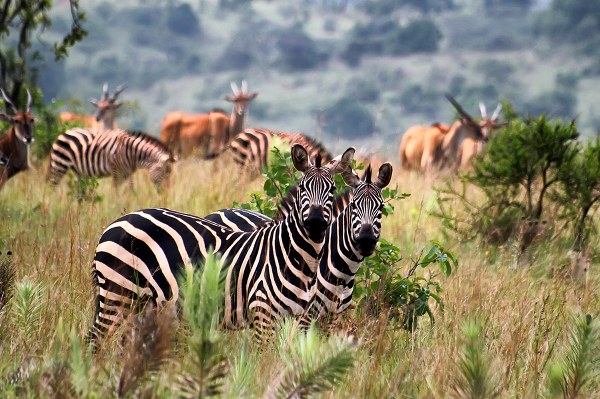
You can also explore Akagera National Park, which is the sole savannah park on Rwanda's eastern border between Tanzania and Lake Victoria. Numerous antelopes, as well as giraffes, buffaloes, lions, cheetahs, and zebras, can be found there.
The newest park in Rwanda, Gishwati Mukura National Park, comes last.
All of the aforementioned different national parks in Rwanda are open all year round; however, the best experiences are had during the dry months, such as while traveling for Rwanda gorilla safaris.
All of these parks of Rwanda can be combined by travelers on Rwanda safaris during their trip to the Land of a Thousand Hills.
Below is the list of Rwanda’s various national parks.
National Park of Akagera

Rwanda’s northeastern region is home to Akagera National Park. With a total area of approximately 1,085 km², this sole savannah national park is the biggest in Rwanda.
The Akagera River, which supplies water to twelve lakes in the park, including Lake Ihema, is part of Rwanda’s Akagera Park, which borders Tanzania.
In order to preserve wildlife and plants in three different habitats—savannah, mountain, and swamp—this national park was established in 1934.
More than 480 bird species and almost 1000 mammals, including the African Big Five—the lion, cape buffalo, elephant, leopard, and rhino—have been identified in Rwanda’s Akagera National Park savannah ecosystem.
The majority of Akagera’s game animals are seen during game drives in the forests and savannah grasslands.
It should be noted that before 2015, Akagera Park had no lions. However, in an effort to increase the park’s wildlife diversity, the African Parks management moved seven lions to this protected region.
The Rwanda Tourism Board, a division of the Rwandan government, owns the Akagera Management Company, which is currently in charge of this savannah habitat and has made restoring wildlife a national priority since the genocide in 1994.
Incredible Attractions for Tourists in Akagera National Park
Large herds of zebras, Cape buffaloes, elephants, cheetahs, black rhinos, leopards, golden cats, serval cats, elands, and impalas are just a few examples of wild wildlife.
The Lilac-breasted Roller, Black-headed gonolek, White-browed coucal, African fish eagle, Double-toothed barbet, and Marsh Tchagra are among the common Avians found in Akagera.
Akagera National Park is home to numerous water bodies, but Lake Ihema is the most well-known. There are a variety of aquatic birds in this lake, along with hippos and several crocodiles.
Popular Things to Do in Rwanda’s Akagera National Park
- Going on game drives on the savannah plains will allow you to witness a variety of game creatures, including large herds of zebras, buffaloes, lions, black-spotted hyenas, and antelopes.
- The only national park in Rwanda where tourists can see savannah avifauna (500+), such as the Double-toothed Barbet, Booted Eagle, Crested Barbet, and Martial Eagle, is Akagera National Park, making birdwatching a popular activity.
The majority of Akagera National Park’s birding activities are conducted in savannah forests and even on boat cruises around Lake Ihema. In many parts of the park, animal viewing tours can be combined with birdwatching.
- When most animals visit the lake shores to drink water, the afternoon is the ideal time of day for Lake Ihema boat cruises for game viewing excursions. Common inhabitants include crocodiles, large hippo pods, and aquatic wildlife.
- Exploring wildlife through nature walking at Akagera Park is an unforgettable experience in the country. African elephants, different antelopes, giraffes, zebras, and buffalo can all be seen on foot when accompanied by a game ranger at a safer distance.
- Fishing on Lake Shakani is an adventure that is less well-known than game drives in Akagera Park.
- Local communities/settlements close to Akagera Rwanda National Park are visited on community excursions. A few locals used to be former poachers!
Rwandan National Parks: National Park of Volcanoes
Parc National des Volcans is another name for Volcanoes National Park in French. It is located in Rwanda’s northwest and borders the Virunga National Park in the Democratic Republic of the Congo and the Mgahinga Gorilla National Park in Uganda, and covers an area of 160 square kilometers.
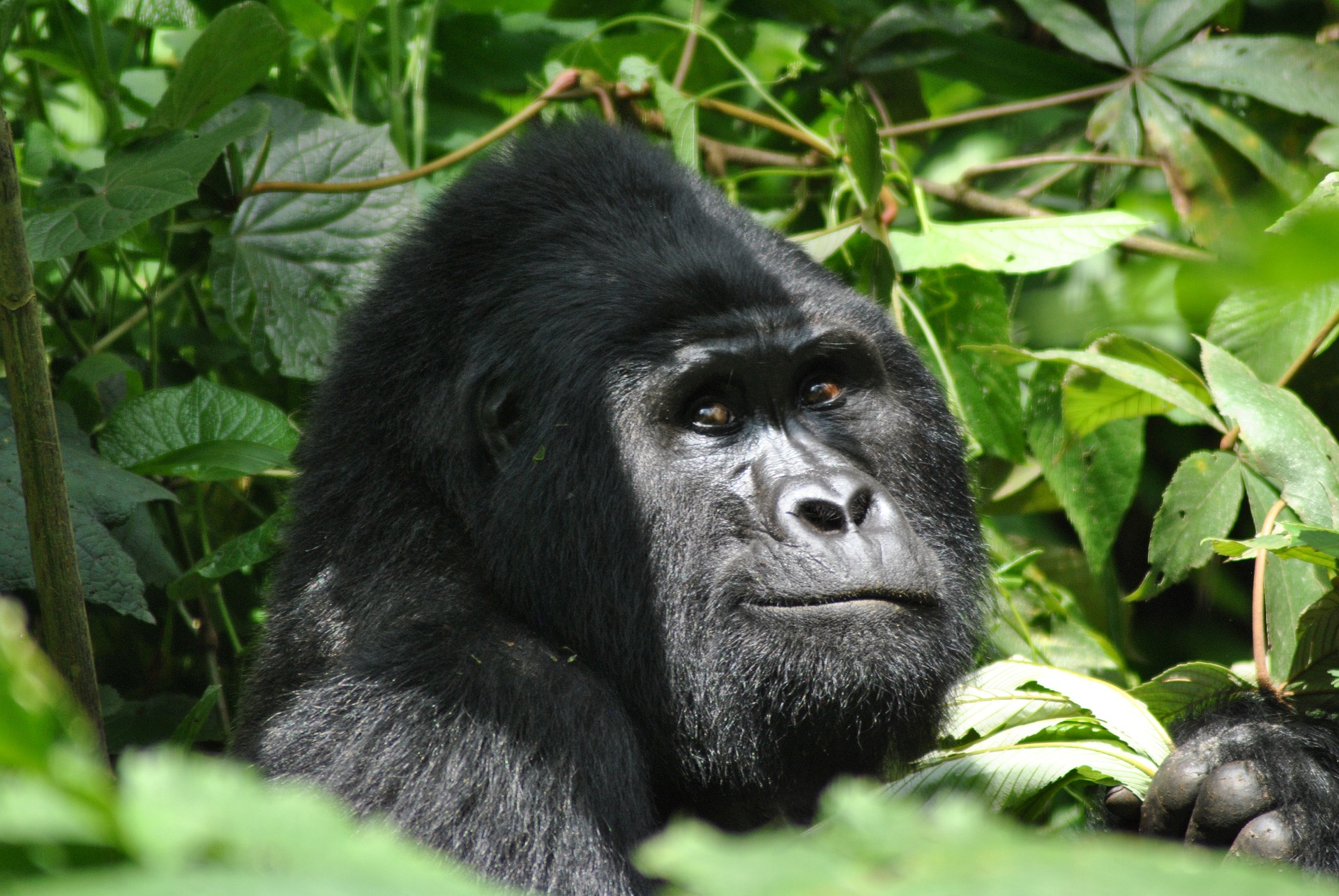
The only location in Rwanda for gorilla trekking safaris is Rwanda Volcanoes Park. Rwanda’s Volcano Park is home to one of the world’s largest population of endangered mountain gorillas, second only to Uganda’s Bwindi Impenetrable National Park.
Five of the eight summits that comprise the Virunga Massif are located in this picturesque national park in the country. These peaks include Mount Karisimbi, Bisoke, Sabyinyo, Muhabura, and Gahinga.
The government of Rwanda first gazetted this park in 1925 primarily to protect the endangered mountain gorillas.
Volcanoes National Park’s Top Attractions
- Seeing mountain gorillas in their natural environment is very breathtaking. The largest primates on the planet, these great apes in Rwanda often weigh 180 kg and are listed as endangered by the International Union for Conservation of Nature (IUCN).
The gentle giants got their name because these enormous apes are incredibly gentle despite their amazing strength and size!
Like humans, these great apes live in families, with a dominant male known as a Silverback serving as the head of each family.
- Golden Monkeys: In East Africa, golden monkeys are the most exquisite. Only the Virunga Mountains in Rwanda Volcanoes National Park and Uganda Mgahinga National Park are home to them worldwide.
- The picturesque Virunga Mountains: Volcano National Park is home to five Virunga volcanoes, and most visitors like trekking up Mount Bisoke and Karisimbi.
- Dian Fossey Tombs: Dian Fossey was a renowned American primatologist who made significant contributions to gorilla conservation in the country and the world. You can see the tombs of gorillas who were killed by poaching all around the grave of this remarkable woman.
- Gorgeous Avifauna: Rwanda Volcanoes National Park is home to almost 200 species of birds. These include the Bar-tailed trogon, Rwenzori Turaco, Doherty’s bush-shrike, and Dusky crimsonwing, and they can be seen along the gorilla trekking trails.
- Musanze Caves: These are enigmatic caverns with a fascinating past that are well worth discovering.
- Located just beyond the park are the twin lakes.
- After the gorilla trekking adventure, Iby’iwacu Cultural Village is an excellent place to have cultural exchanges in the country.
In Volcanoes National Park, gorilla trekking is regarded by many tourists as the most exciting game-viewing experience in East Africa. It offers you a wonderful chance to get to know the kind giants in their lovely, foggy habitat.
The gorilla families used for this amazing experience are fully habituated and well-known to humans.
Gorilla trekking trips in Rwanda can last anywhere from two to five hours, depending on how the gorillas are moving.
OTHER ACTIVITIES INCLUDE.
- Golden monkey trekking: Gorilla trekking trips and golden monkey tracking hikes in Rwanda Volcanoes National Park are comparable. Golden Monkey Trek is fair, though.
- Volcano hiking is an exciting experience that mountain hikers should not pass up! Hiking before or after gorilla trekking is acceptable, and many tourists opt to explore Mount Bisoke, which is topped by a crater lake. The hike lasts for one day.
- Bird watching: The majority of Rwanda’s montane avifauna and a few endemic species of the Albertine Rift may be found in Volcano Park, Rwanda. In Volcano Park, Rwanda, highland woods are the primary location for bird-watching excursions.
- You can discover a lot about the history of this remarkable American primatologist and her pioneering work in gorilla tourism in Africa by visiting the Dian Fossey Tomb.
- Take pleasure in cultural interactions in the Iby’iwacu Cultural Village.
- Explore the Twin Lakes in the vicinity of Volcano Rwanda Park.
National Parks in Rwanda: Nyungwe Forest National Park
In the southwest of Rwanda, near the Burundian border, sits Nyungwe Forest National Park—also known as the Nyungwe Park, which was established in 2005 and covers an area of 270 square kilometers. It is popular for having the largest and oldest montane forest in Africa, with over 200 types of trees, making it a biodiversity hotspot.
Chimpanzee trekking safaris are a popular activity in Rwanda’s Nyungwe National area, but this stunning tropical rainforest area has much more than just chimps!
Twelve other primates can be found in Park Nyungwe, including Vervet Monkeys, Olive Baboons, Blue Monkeys, and Red-tailed Monkeys, to name a few.
With approximately 350 Avian types, including roughly 30 Albertine endemics, Nyungwe Park is a haven for birdwatchers across East and Central Africa.
One of Africa’s oldest tropical rainforests is thought to be Nyungwe Park. Normally, the mist covers it well. It has stunning vistas that are perfect for capturing pictures!
You will be treated to breathtaking views of Lake Kivu on the trip to Nyungwe Park. The largest lake in Rwanda is Lake Kivu, which is thought to contain methane gas.
Incredible Nyungwe National Park Attractions
There are several tourist attractions in Nyungwe Forest that Rwanda safari guests can view, and the most well-known ones have been covered for you below.
- The Primate Species in Nyungwe Park: Uganda Kibale National Park, the top destination for chimpanzee trekking safaris in Africa, is the only place that can match Nyungwe Park’s abundant primate population.
Chimpanzees, baboons, L’Hoest’s monkeys, Hamlyn’s monkeys, Ruwenzori colobus, Central African red colobus, black and white monkeys, and red-tailed monkeys are just a few of the wonderful simians that tourists can see at Nyungwe in East Africa.
The best approach to see the aforementioned primate types in Nyungwe during your Rwanda tour is to go on nature walks. It is possible to go on chimpanzee trekking expeditions.
- Birds in Nyungwe Park: Nyungwe National Park is home to a variety of avifauna, including forest birds, Albertine endemics, and certain highland Avians. There are roughly 350 avifauna in all.
The Great Blue Turaco, Rwenzori Turaco, Yellow-eyed Black Flycatcher, Bar-tailed Trogon, Purple-breasted Sunbird, and Regal Sunbird are a few of the noteworthy birds found in Nyungwe Park.
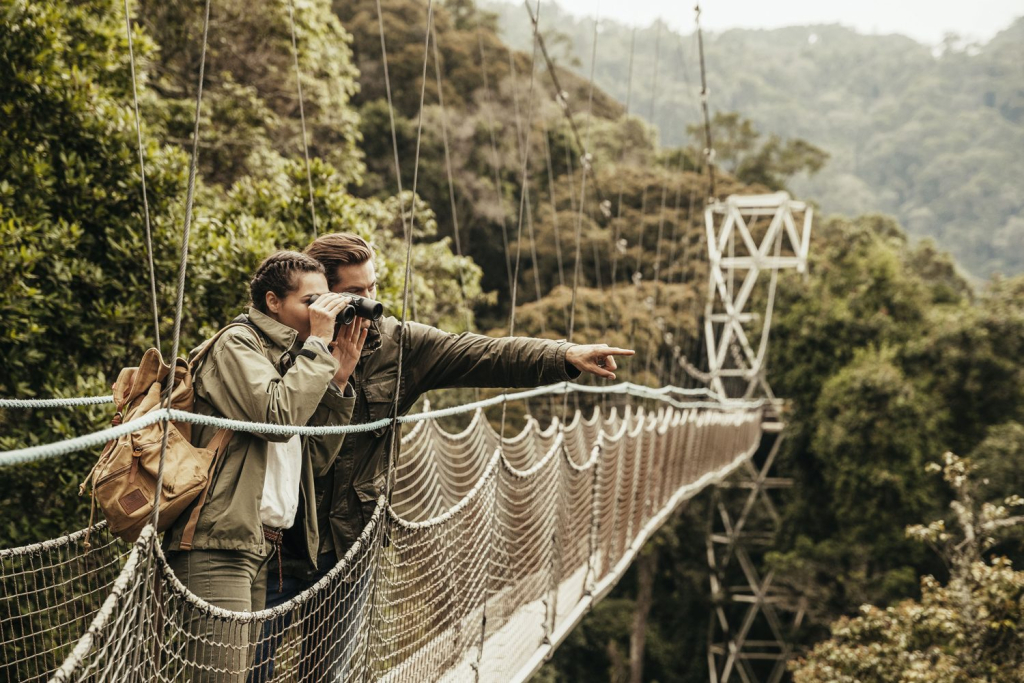
- Nyungwe Canopy Walkway: This canopy walkway in Nyungwe Park offers beautiful vistas. The average exploration time for this 160-meter-long, 70-meter-high suspended bridge is two hours.
- Nyungwe Park’s Gorgeous Vegetation: There are more than 1,068 plants known to exist there. Mahogany and even orchids are the most frequent trees. Herbs make up the majority of the vegetation in this protected area.
Nyungwe Forest National Park Activities
There are a lot of fantastic things for tourists on Rwanda safari tours to do in Nyungwe Forest National Park.
Let’s examine the top tourist activities in Nyungwe Park below:
- The primary activity for tourists visiting Nyungwe National Park is chimpanzee trekking. Following chimpanzees is an experience of a lifetime because it allows you to spend time with the primates, which are man’s closest relatives.
You will witness several primates and animals in this protected area, including vibrant avifauna, while trekking chimpanzees. Tourists are only allowed to observe chimpanzees for an hour.
- Bird watching: It’s difficult for travelers on Rwandan safaris to pass up Nyungwe Park’s birding excursions. You can see the majority of the avifauna at Nyungwe Park thanks to its many birding trails.
Expect to see, among others, the Dusky Crimsonwing, Bar-tailed Trogon, Yellow-eyed Black Flycatcher, and Great Blue Turaco.
- Taking a Nyungwe Forest Canopy Walk: This walk provides breathtaking views of Nyungwe Wood and the surrounding area. It’s rare to miss seeing beautiful monkeys like the Black and White Colobus in tree canopies while out for a stroll. Lake Kivu can also be seen from some locations.
- Colobus Monkey Tracking: Two habituated populations of Colobus monkeys are available for primate tours within Nyungwe.
- Taking Nature hikes in Nyungwe Forest: Visitors have a fantastic opportunity to experience this biodiverse park by going on forest hikes.
Gishwati Mukura National Park
Gishwati Mukura’s status as one of Rwanda’s newest parks, created in 2015, demonstrates the nation’s commitment to environmental preservation in East Africa. This park is located in Rwanda’s western region. Gishwati and Mukura are two of its distinct woods.
These two forests were once heavily exploited, but they are currently undergoing significant restoration, making them safe havens for an increasing number of fauna.
Travelers who visit Gishwati-Mukura forests can engage in a variety of main activities, such as bird watching, chimp trekking, and forest treks, where they may come across chimpanzees, golden monkeys, and other wild fauna.
When to Go to Rwanda’s National Parks:
Although visitors on African safaris in Rwanda can visit the country’s national parks at any time of year, it is advised that they do so during the dry months of June through September and December through February.
Chimpanzee tracking and gorilla trekking trails are typically drier and more peaceful to travel because Rwanda typically receives less rainfall during the dry months. Safaris at Akagera Park for game viewing are also amazing.
In Rwanda, the long rainy season lasts from March to May, while the short one lasts from October to November. Due to the low season, the majority of lodges in this nation offer their guests discounts.
During this time of year, Volcanoes National Park offers gorilla trekking, though it’s tricky considering the muddy trails.
Packing List for Rwanda Safari Tours
When visiting Rwanda’s many national parks, the packing list is rather straightforward and shouldn’t break the bank.
Here are some items to bring when visiting Rwandan and East African national parks:
- A camera for taking pictures
- Light-weight hiking boots
- Raincoat
- One of the waterproof backpacks
- Kind safari attire is advised; khaki is suggested.
- Personal hygiene products
- The insect repellent
- Sunscreens and pairs of sunglasses
- A sunhat
- An insulating sweater
- A bottle of water.
FAQs Regarding National Parks in Rwanda
How Many Rwandan National Parks Are There? | How Many Rwandan Parks Are There?
Rwanda is home to four game parks. These consist of Gishwati Mukura NP, Nyungwe Park, Akagera Park, and Volcanoes National Park, and travelers can see these when they visit the country.
Which Rwandan National Park Sees the Most Visitors?
The most popular park in Rwanda is Volcano Park, which is well-known for gorilla trekking tours and even missions to follow golden monkeys.
Which Rwandan Park Is the Biggest?
Akagera National Park is Rwanda’s largest park. Akagera Park is located on Tanzania’s eastern border and spans an area of more than 1,122 km². From Kigali city, the travel takes roughly three to four hours.
What Issues Do Rwanda’s National Parks Face?
Lack of funding, habitat destruction, and a shortage of staff to monitor animals in these protected areas are the primary issues facing the management of Rwanda’s national parks, which are all under the control of the Rwanda Development Board. In the majority of this nation’s protected areas, poaching is no longer a major problem.
However, the return of former poachers to conservation efforts has helped reduce illegal hunting in Rwanda.
Plus, the government of Rwanda has partnered with Wilderness Safaris to restore the Giswati-Mukura forest area and protect chimpanzee populations.
What Is Rwanda’s New National Park?
Rwanda’s newest park is Gishwati NP. The Giswati and Mukura woods were the primary reason this rainforest park was gazetted in 2016. Covering about 32 km², it is Rwanda’s smallest park.
Which Rwandan Game Park Is It?
There are four game parks in Rwanda. These include Giswati Mukura Park, Nyungwe Park, Akagera Park, and Volcano Park.
In addition to providing visitors with opportunities to see wildlife, Rwanda’s national parks allow people to establish a connection with nature!
Rwandan parks welcome you whether you’re interested in hiking mountain gorillas, tracking chimps, trekking golden simians, bird viewing, or going on a wilderness safari journey through the African savannah plains.
Every national park has something special to offer; for example, Akagera Park is well-known for game-viewing safaris, Nyungwe Park for chimp trekking excursions, and Volcanoes Park for gorilla trekking safaris.
Conclusion
Rwanda’s four national parks—Volcanoes, Akagera, Nyungwe, and Gishwati—offer gorilla treks, Big Five safaris, chimp encounters, and conservation triumphs in diverse ecosystems. Book your Rwanda wildlife safari now: witness endangered creatures, support communities, and create lifelong memories in the Land of a Thousand Hills!